


Exhibit description:
Queerness under fascism, c. 1791 – 1944
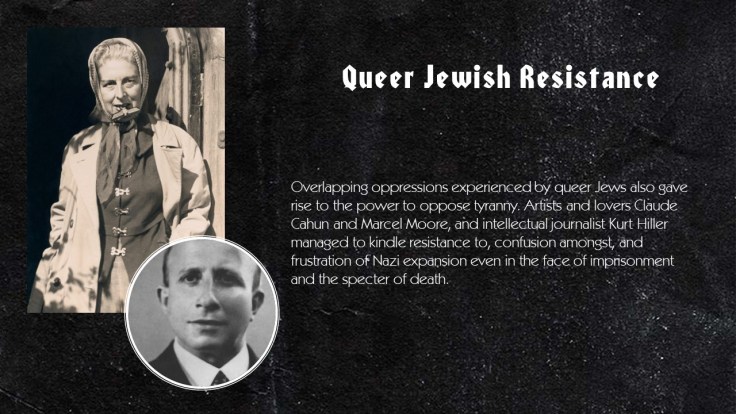
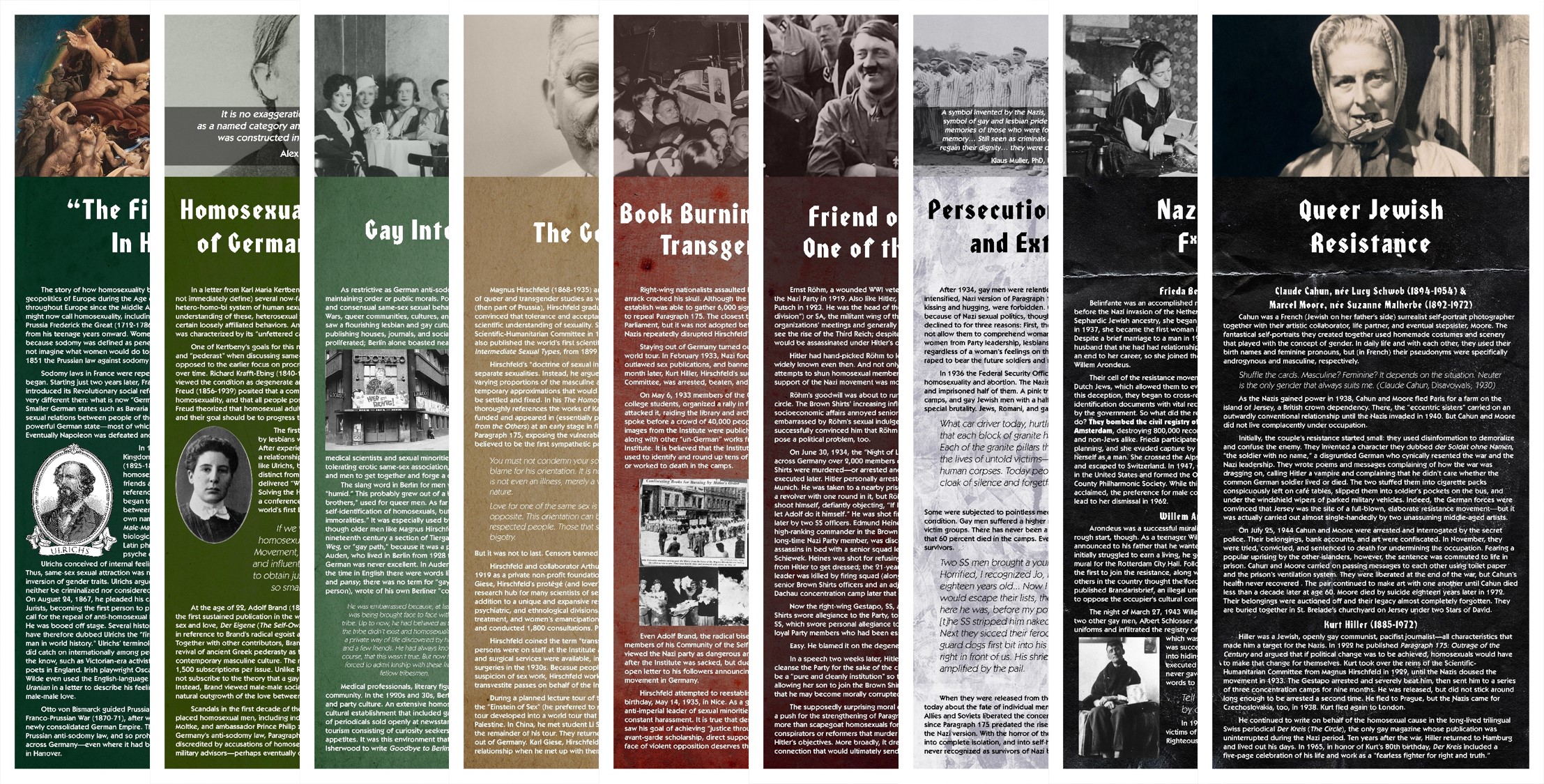
This exhibit features profiles of people and ideas that advanced the development of the modern gay, lesbian, and bisexual identities in Germany pre-1900 through the end of WWII, and gave voice and bodily expression to the transgender experience as early as the 1930s.
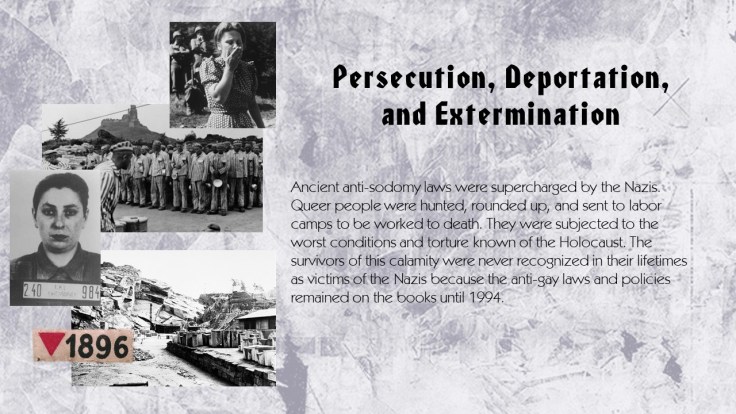
So much of the persecution visited upon LGBTQ people in, for example, in the 1950s and 60s United States included a program of erasure of the incredible diversity of gender and sexuality before and between the Wars. Where might our culture be now if it remembered that same-sex relationships and the transgender experience are not so novel, after all? Were it not for Nazi destruction of research from the likes of Magnus Hirschfeld and the reimprisonment of the men with the pink triangle, even after surviving slave-labor death camps, maybe we’d be further along.
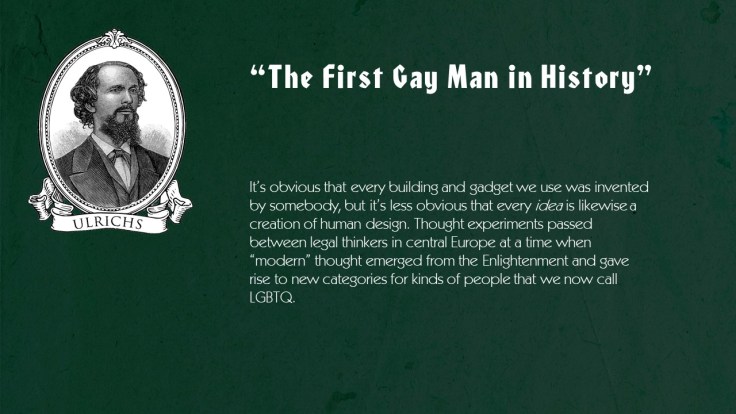
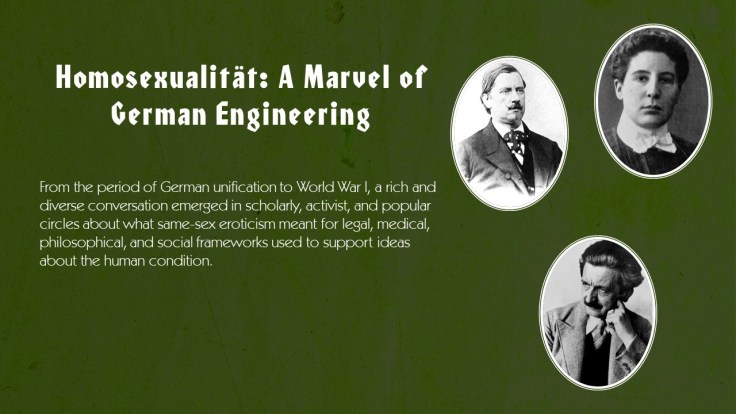
People like us go way back—farther back than almost anybody realizes. The modern movement for civil rights and social inclusion of “sexual variants” can be traced to philosophical musings in the 1860s, moral arguments made before legal and medical associations in speeches in the 1890s, scientific and ethnological research conducted (across the world) in the 1920s, and bombings by anti-Nazi resistance fighters at the height of WWII.
Occasions for display:
January 27
International Holocaust Remembrance Day
April/ May
Yom HaShoah
May 8
Victory in Europe Day
December 10
Human Rights Day
Number of pieces:
9 banners
Est space:
27 linear feet
(153 sq ft)
Debut:
2022
Testimonials
I brought a group of 8 students to see the exhibit displayed in UWM’s library. The students were overwhelmingly impressed by how much of this history had been completely glossed over or omitted in their previous history courses. I was particularly struck by the quality and emotional impact of the visual imagery used. This exhibit told a compelling and nuanced story about the horrific violence the Nazi regime inflicted on the German LGBTQ+ community, drawing attention to various identities and groups which are often overlooked in other treatments of this subject, particularly queer women. It was truly eye opening.
Ariana Myers, Ph.D.
Director, UW-Milwaukee LGBTQ+ Resource Center
Further reading:
Bleuel, Hans Peter. Sex and Society in Nazi Germany. Lippincott, 1973.
Beachy, Robert. Gay Berlin: Birthplace of a Modern Identity. Vintage Books, 2015.
Beck, Gad, and Frank Heibert. An Underground Life Memoirs of a Gay Jew in Nazi Berlin. Translated by Allison Brown. University of Wisconsin Press, 2000.
United States Holocaust Memorial Museum. “The Frieda Belinfante Collection (Curators Corner #26).” YouTube, 26 June 2014, https://www.youtube.com/watch?v=R0nvPi4u6Fw
Epstein, Robert and Jeffrey Friedman, directors. Paragraph 175. 2000.
Heger, Heinz. The Men with the Pink Triangle: The True, Life-and-Death Story of Homosexuals in the Nazi Death Camps. Translated by David Fernbach. Alyson Books, 1994.
Plant, Richard. The Pink Triangle: The Nazi War Against Homosexuals. Henry Holt & Co., 1986.
Kennedy, Hubert. Ulrichs: The Life and Works of Karl Heinrich Ulrichs, Pioneer of the Modern Gay Movement. Alyson Publications, 1988.
Koskovich, Gerard. “Through Knowledge to Justice: The Sexual World of Dr. Magnus Hirschfeld (2017).” YouTube, 11 July 2019, https://www.youtube.com/watch?v=3kmjS4k8xP4
Marcus, Eric. “Magnus Hirschfeld.” Making Gay History, season 4, episode 2, 2018, https://makinggayhistory.com/podcast/magnus-hirschfeld/
Seel, Pierre. I, Pierre Seel, Deported Homosexual: A Memoir of Nazi Terror. Translated by Joachim Neugroschel. Basic Books, 2011.
United States Holocaust Memorial Museum. “Pride Month: The Nazi Persecution of Gay People.” YouTube, 3 June 2020, https://www.youtube.com/watch?v=7hiOz14jh7k.
Lesson Plans:
“Gender, Sexuality, and the Holocaust,” US Holocaust Memorial Museum
“Homosexual Life under Nazi Rule: The Legacy of Paragraph 175,” Facing History and Ourselves
“LGBTQ+ Experiences in the Holocaust,” Dr. Jake Newsome for Unspoken film
 VINCE.lgbt